Estate-Style Living In Alamo: Space, Privacy, Community
June 18, 2026
June 18, 2026
Are you looking for more room to breathe without giving up everyday convenience? If Alamo has caught your eye, you are probably drawn to its larger homesites, quieter setting, and established East Bay reputation. Understanding what estate-style living really looks like here can help you decide whether it fits your pace, priorities, and long-term goals. Let’s take a closer look.
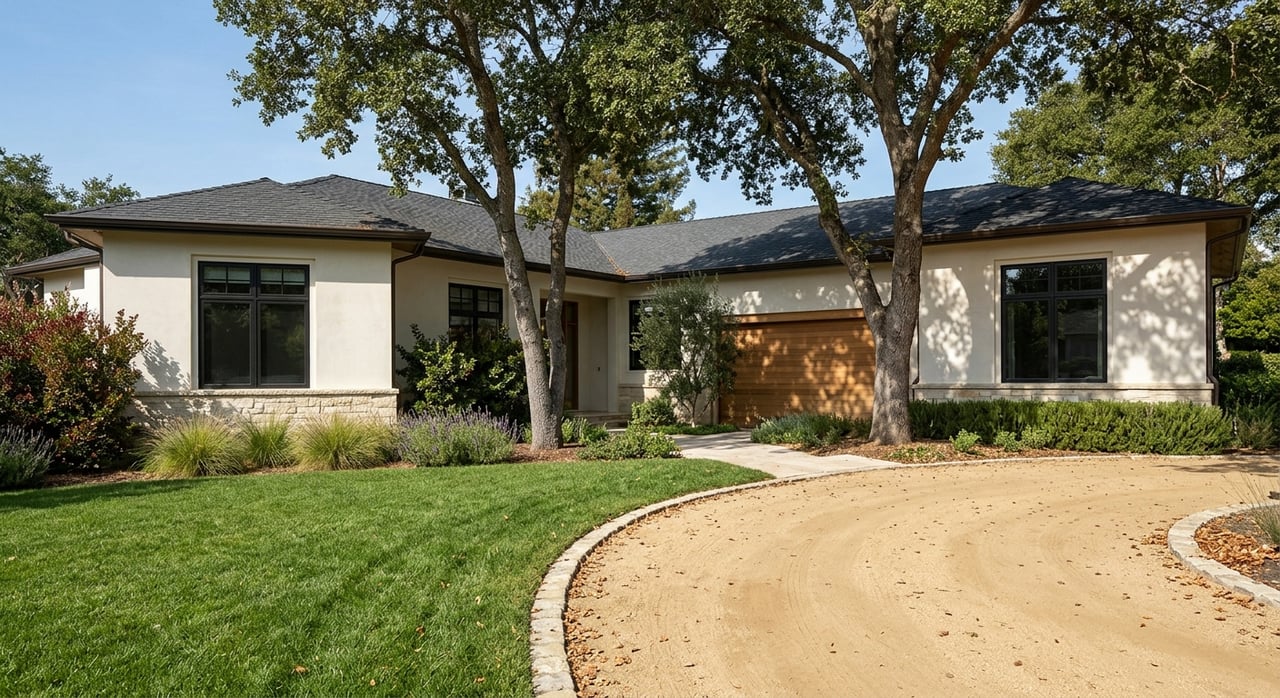
In Alamo, estate-style living usually points to single-family homes on relatively large lots, mature landscaping, and a more spacious residential setting than you might find in denser East Bay communities. Contra Costa County planning materials describe Alamo and nearby Castle Hill as places known for comfortable residential neighborhoods, wooded hillsides, and housing that is mostly single-family ranch-style homes, with some estates on large rural tracts.
That history matters because it helps explain the feel of the area today. Alamo began as ranch and orchard country, stayed rural until after World War II, and later evolved as freeway access improved and developments such as Round Hill Country Club helped shape the community.
It is also important to know that Alamo is not the same from one area to the next. County planning documents note a multi-family corridor along Danville Boulevard south of Stone Valley Road and a defined commercial core near Danville Boulevard and Stone Valley Road, so the estate-style label fits many parts of Alamo, but not every property.
One of Alamo’s biggest draws is the sense of separation from busier, more built-up areas. The local setting tends to offer more landscape, more space between homes, and a quieter rhythm that many buyers associate with retreat-style living.
That feeling is reinforced by the natural surroundings. Las Trampas Wilderness Regional Preserve spans 6,050 acres nearby, and the East Bay Regional Park District notes that its size and terrain create a sense of privacy and escape from urban hustle and bustle.
County planning priorities also support that character. Local planning emphasizes preserving mature trees, protecting the natural setting and wildlife habitat, and reducing wildfire risk, all of which help maintain Alamo’s established residential environment.
A common misconception is that more privacy means you have to feel disconnected. In Alamo, that is not necessarily the case. While the community is not defined by dense urban walkability, it still offers practical day-to-day access to services, trails, and regional connections.
The Iron Horse Regional Trail is part of that equation. It passes through a rural and residential area and connects downtown Alamo with the Alamo Square shopping center, giving residents a useful link between neighborhood spaces and daily errands.
For shopping and basic needs, Alamo Plaza Shopping Center serves as a key commercial hub in town. It is anchored by Safeway and Rite Aid, and it also hosts a weekly Sunday farmers market, making it an important gathering point as well as a practical stop.
Estate-style living is not only about lot size or architecture. It is also about how a place supports your lifestyle. In Alamo, community identity often comes from a mix of established neighborhoods, local gathering spots, and club-centered social life.
Round Hill Country Club is one of the clearest examples. Founded in 1959 as a golf course and luxury housing community, it remains a well-known part of Alamo’s identity, with amenities centered around golf, tennis, dining, and social programming.
Even if private club living is not your focus, Alamo still has a distinct community feel. County planning materials describe the commercial core as a place to preserve services, jobs, and a central gathering place, which speaks to the area’s balance of privacy and connection.
If you are considering a move to Alamo, it helps to picture the day-to-day experience realistically. This is generally a place where you trade a faster, more urban pace for a setting that feels more residential, open, and buffered.
Main travel corridors include Danville Boulevard, Stone Valley Road, and Interstate 680. For many residents, those routes shape commuting patterns, school runs, errands, and weekend plans across the broader East Bay.
Transit options are also part of the picture. County Connection Routes 21 and 321 link Walnut Creek BART with stops on Danville Boulevard and at Alamo Plaza, and the Alamo Creek Shuttle serves Walnut Creek BART and the Danville Park 'n Ride.
For buyers who want access to regional transit, Walnut Creek BART is an important nearby hub. Its location at 200 Ygnacio Valley Road gives Alamo residents an option for reaching other parts of the Bay Area without relying entirely on driving.
The appeal of estate-style living often starts with larger parcels, mature landscaping, and outdoor space. Those features can create beauty, privacy, and flexibility, but they also come with responsibility.
Landscape maintenance is a real consideration in Alamo. Contra Costa Water District notes that many households use more than half of their water for landscape irrigation, and its guidance highlights efficient watering, mulch, and regular irrigation system checks.
That means your decision is not just about the house itself. It is also about whether you are comfortable with the time, budget, and ongoing care that larger outdoor spaces often require.
If Alamo’s estate-style appeal fits what you want, it still helps to pressure-test the lifestyle before you make a move. A thoughtful home search should look beyond square footage and finishes.
Here are a few practical questions to keep in mind:
These questions can help you narrow your priorities and avoid choosing a home based only on appearance. In a place like Alamo, the right fit often comes down to how the property supports your everyday life.
Alamo continues to attract buyers because it offers a combination that can be hard to find elsewhere in the East Bay. You get a more spacious residential environment, access to open space, and a community framework that still supports daily convenience.
Just as important, the area has a distinct identity. It is shaped by its rural roots, established homes, wooded setting, and steady commitment to preserving its quieter character.
For many buyers, that balance is the draw. Alamo offers room to spread out, a stronger sense of privacy, and enough connection to shops, trails, and transit to keep life practical.
If you are exploring Alamo and want guidance on how different areas, property types, and lifestyle tradeoffs compare, the Gallegos Boaman Group can help you evaluate your options with clear, local insight.
Stay up to date on the latest real estate trends.
We bring together a mix of integrity, imagination and an inexhaustible work ethic, striving to make each buying and selling experience the best possible. Contact us today to find out how we can be of assistance to you!