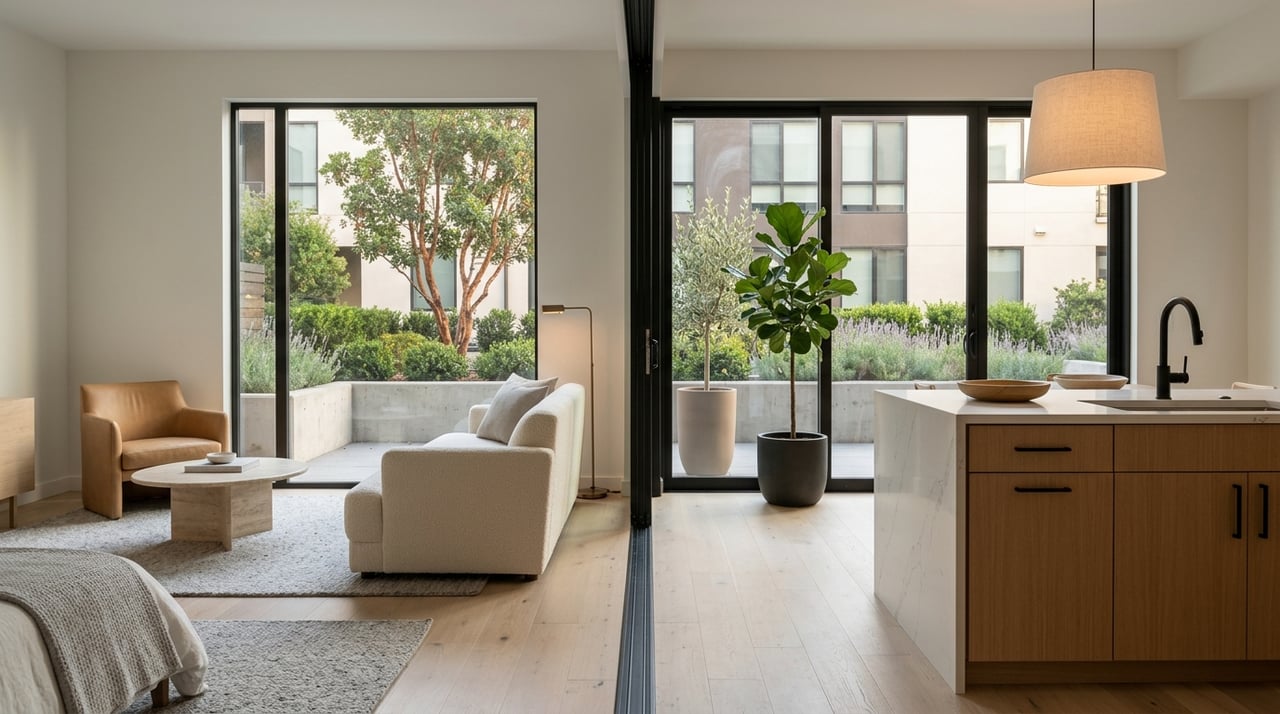
Downtown Walnut Creek Lifestyle And Housing Snapshot
May 28, 2026
May 28, 2026
Are you looking for a downtown that feels easy to live in day to day, but still gives you access to shops, dining, transit, and outdoor space? Downtown Walnut Creek stands out for exactly that reason. If you are considering a move, planning to sell, or simply trying to understand the area better, this snapshot will help you see how downtown lifestyle and housing fit together. Let’s dive in.
Downtown Walnut Creek is the city’s Core Area, centered around the Pedestrian Retail District and the Walnut Creek BART station. According to city planning documents, this part of Walnut Creek is highly walkable and places homes close to retail, civic spaces, and transit. That combination shapes much of the area’s appeal.
In practical terms, downtown offers a more urban feel than many East Bay suburban centers. You can find mixed-use buildings, multifamily housing, public gathering spaces, and transportation options all within a compact area. At the same time, you are still connected to the broader Walnut Creek community, where housing types and neighborhood settings vary widely.
If convenience matters to you, downtown Walnut Creek checks a lot of boxes. The area brings together errands, dining, entertainment, and commuting in one central district. That can make daily life feel more streamlined, especially if you want to rely less on your car.
The city also supports that convenience with transit, public parking, and pedestrian-friendly planning. So while downtown is active and busy, it is designed to help residents and visitors move around with relative ease.
The city describes the Core Area as highly walkable, and that is a major part of its identity. Residences in and around downtown sit close to shops, civic facilities, and transportation. For many buyers, that means a lifestyle built around access rather than distance.
This can be especially appealing if you want to step out for coffee, meet friends for dinner, or run a few errands without planning a longer drive. It also gives downtown a different rhythm from more residential parts of Walnut Creek.
Walnut Creek is unusually transit-connected for an East Bay suburb. The city says two BART stations serve Walnut Creek, and the Walnut Creek station covers downtown along with major employment and shopping areas. Both stations also offer secure vehicle parking and bicycle storage lockers.
Downtown connections extend beyond BART. The Route 4 Downtown Trolley runs seven days a week from Walnut Creek BART with service every 20 minutes, and Route 5 also connects downtown destinations to BART. For commuters or residents who value flexibility, that transit access is a meaningful advantage.
Downtown parking is not limited to street spaces. The district relies on public garages and metered parking, with city garages offering the first hour free. Downtown parking resources also note the availability of EV chargers and multiple meter zones.
That matters because a walkable downtown still needs practical infrastructure. Whether you live nearby or are visiting, structured parking helps support the area’s retail and dining activity.
Downtown Walnut Creek is one of the East Bay’s more established shopping and dining destinations. The mix is broad, which helps the area appeal to a range of residents and visitors. You can find everyday conveniences, recognizable retail, and a busy restaurant scene all in one district.
Just as important, downtown is not only about shopping. Arts programming, public events, and civic spaces add another layer to the experience and give the area a more complete sense of place.
Broadway Plaza is the main retail center in downtown Walnut Creek. Downtown Walnut Creek describes it as an open-air shopping center with more than 80 retailers and specialty shops, including Nordstrom, Macy’s, Apple, and Lululemon. That concentration of retail gives downtown a regional draw.
For residents, this means shopping is woven into daily life rather than set apart from it. For sellers, proximity to a recognized retail district can also shape how buyers view the area’s convenience and lifestyle value.
The downtown dining scene is wide-ranging rather than narrowly defined. Downtown Walnut Creek describes the district as a shopping and dining destination with cafés, casual bites, upscale dining, and international cuisine. The Lesher Center also notes that the Arts District includes restaurants and retail around Locust, Bonanza, California, and Civic.
That variety gives you options for both routine outings and special occasions. It also supports the kind of active street life many buyers associate with a downtown setting.
Cultural life is one of downtown Walnut Creek’s biggest differentiators. The Lesher Center for the Arts describes itself as the premier arts destination of Contra Costa County and says it presents more than 900 productions and events each year. It also houses the Bedford Gallery and Center Repertory Company.
City arts programming adds to that foundation with public art tours and regular downtown arts events. The local calendar also includes recurring street festivals, concerts, Oktoberfest, holiday tree lighting, and seasonal ice activity. For many people, that event schedule helps downtown feel lively throughout the year.
A downtown location does not mean giving up access to green space. Walnut Creek balances its more urban core with parks, trails, and recreation nearby. That mix is part of what makes the area feel like an urban-suburban hybrid.
If you want walkable amenities but still value parks and outdoor time, this is an important part of the picture. Downtown Walnut Creek offers both immediate convenience and access to larger recreational spaces.
Civic Park is the green space most closely tied to downtown living. Walnut Creek Arts + Rec describes it as a 16.7-acre park with playgrounds, a community center, a library, a seasonal ice rink, trail connections, and links to the Iron Horse Trail and Creek Walk.
That gives downtown residents a meaningful outdoor amenity close to the core. It also strengthens the connection between everyday downtown life and recreation.
Heather Farm Park expands the lifestyle appeal beyond the immediate downtown area. The city lists it as a 102-acre park with an all-abilities playground, off-leash dog park, skate park, swim center, picnic areas, fishing pond, equestrian center, and trail connections.
For buyers comparing Walnut Creek to other East Bay communities, this broader park system can be a real advantage. It shows that even if you choose a more central home, you are still close to substantial outdoor amenities.
Housing in Walnut Creek is varied, and downtown reflects one of the city’s most distinct patterns of development. If you are trying to understand where downtown fits in the bigger picture, it helps to look at both the citywide mix and the Core Area’s more recent growth.
The key takeaway is simple: downtown Walnut Creek is more urban in form than the city overall. You will generally see that in the prevalence of multifamily and mixed-use development near transit and services.
Census QuickFacts lists Walnut Creek at about 70,817 residents, with a 64.4% owner-occupied rate, median household income of $130,432, and median gross rent of $2,680. Those numbers point to a mature market with relatively high housing costs and a strong ownership base.
City housing documents show a mixed stock across Walnut Creek as a whole. About 45% of dwellings are single-family, 32% are multiple-family, and 23% are Rossmoor. The city also notes a long-term shift from detached single-family development toward townhouse and larger apartment or condominium projects.
The Core Area has seen most of Walnut Creek’s residential construction over the last 30 years. According to the city’s Housing Element, that development has occurred almost entirely as higher-density multifamily or mixed-use housing. The city also notes that Walnut Creek has about 5,000 townhomes, or roughly one-seventh of total housing stock, with higher densities closer to transportation and services.
That pattern helps explain why downtown appeals to a different buyer than some of Walnut Creek’s more traditionally suburban neighborhoods. If you are seeking a lock-and-leave condo, townhome, or a home close to BART and downtown amenities, the Core Area may be the right fit.
Recent market snapshots point to a competitive Walnut Creek market, even though exact numbers vary by source and methodology. Zillow reported a spring 2026 average home value of $1,043,420 and a median sale price of $861,000, with homes pending in around 15 days. Redfin reported a March 2026 median sale price of $845,000, with homes selling in about 12 days on average.
Realtor.com described Walnut Creek as a seller’s market in March 2026. Taken together, these sources suggest that well-positioned homes can move quickly. For buyers, that means preparation matters. For sellers, it reinforces the value of strategic pricing, presentation, and timing.
If you are shopping downtown Walnut Creek, it helps to define your priorities early. Some buyers are focused on walkability and transit access, while others care more about square footage, parking, or building style. Knowing your tradeoffs can help you move faster when the right property appears.
In a competitive market, strong guidance also matters. A local team can help you weigh not just the list price, but also the location within downtown, the housing type, and the day-to-day lifestyle a property supports.
If you are selling a downtown condo, townhome, or mixed-use residential property, buyers are often looking closely at presentation and convenience. Features like proximity to BART, nearby dining, parking access, and low-maintenance living can shape how your property is perceived.
Thoughtful preparation can also make a difference in a fast-moving market. With the right pricing strategy, marketing plan, and pre-market improvements, sellers can position their homes to stand out.
Downtown Walnut Creek works well for people who want a more connected style of living in the East Bay. The area combines retail, dining, arts, parks, and transit in a way that feels more urban than many nearby suburban centers. At the same time, it remains part of a broader city with a mix of detached homes, townhomes, condos, and recreation options.
That blend is what makes the area distinctive. If you want everyday convenience without losing access to parks, trails, and the wider Walnut Creek community, downtown is worth a closer look.
If you are thinking about buying or selling in Walnut Creek, the right strategy starts with clear local insight. The Gallegos Boaman Group can help you evaluate the market, understand your options, and move forward with confidence.
Stay up to date on the latest real estate trends.
We bring together a mix of integrity, imagination and an inexhaustible work ethic, striving to make each buying and selling experience the best possible. Contact us today to find out how we can be of assistance to you!